

Before puroresu had a name, the ring was already here.
Western-style professional wrestling reached Japan before television made the form famous. Former sumō wrestler Matsuda Sorakichi left Japan for the United States in the 1880s, worked American wrestling circuits, and returned in 1887 to stage a Western-style exhibition in Ginza with Hamada Shōkichi. The show mattered historically, but it did not turn into a Japanese boom. It was not puroresu yet. It was exhibitions, touring performances, curiosity, and a rough outline of something the country would later make its own.

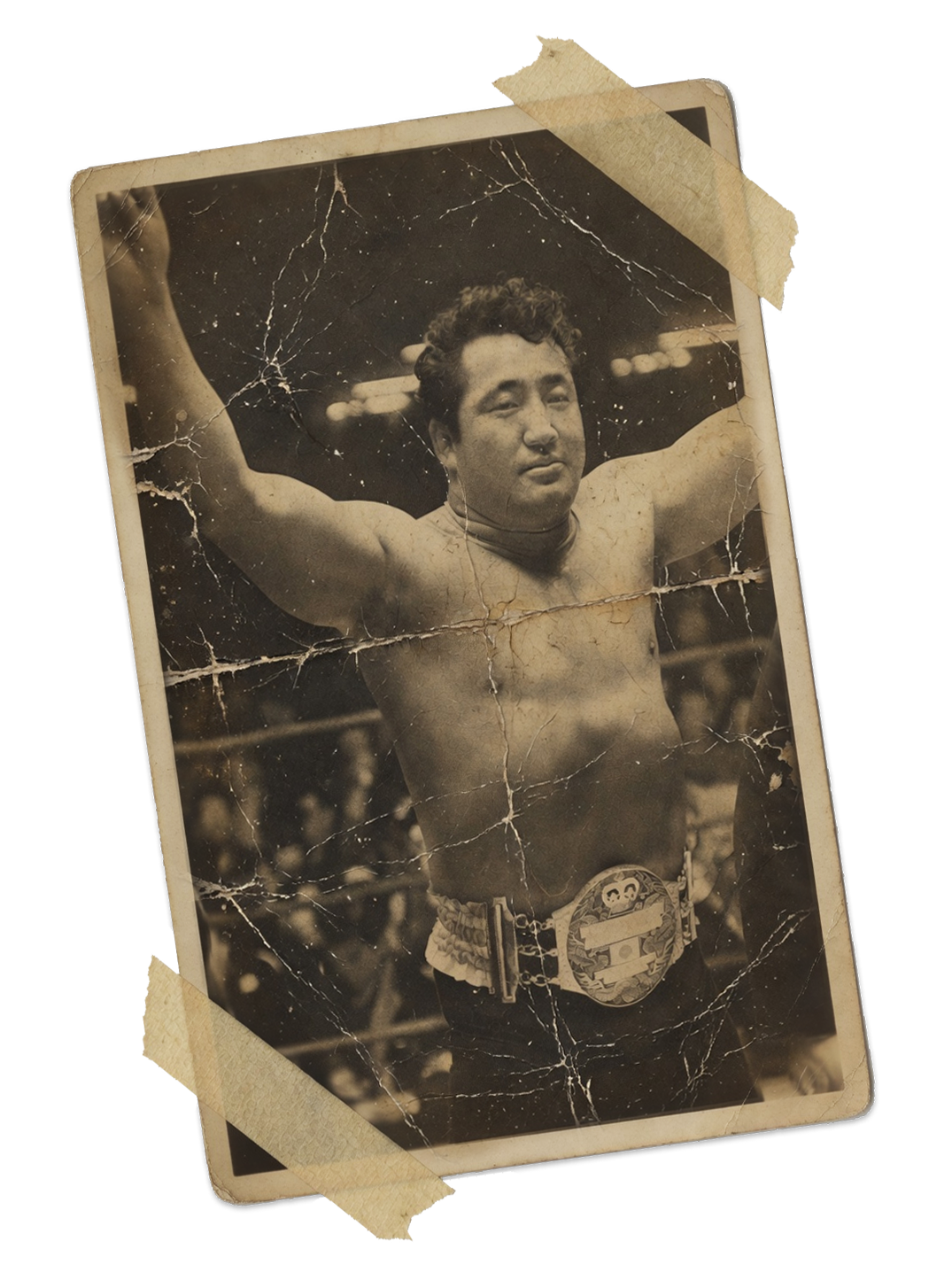
THE START OF MODERN PURORESU.
Modern puroresu begins with Rikidōzan, the Korean-born former sumō wrestler who became postwar Japan's first great wrestling icon. In the early 1950s, the occupation had ended, the country was rebuilding, and television was just beginning to gather strangers around the same screen.
His karate chop and victories over foreign opponents turned wrestling into a public ritual of recovery, pride, and release. After founding the Japan Pro Wrestling Alliance in 1953, Rikidōzan gave the sport its first durable Japanese base and made the ring feel national: in living rooms, in arenas, and in street-corner crowds watching early broadcasts.
- Television Hero
- Broadcasts made wrestling something the whole country watched.
- National Symbol
- Fans were watching a country rebuild in real time.
- The Foundation
- The JWA and TV boom gave puroresu its first real base.
When puroresu became culture.
After Rikidōzan's death in 1963, his influence did not disappear. Antonio Inoki and Giant Baba had both come up inside his JWA world: Baba, the towering former baseball pitcher, and Inoki, the restless young recruit Rikidōzan brought back from Brazil. They learned under the same roof, but carried different instincts out of it.
In 1972, Inoki's New Japan and Baba's All Japan split that inheritance into rival visions. The answer was not just bigger moves. It was discipline, realism, respect, escalation, and the feeling that a match could ask a crowd to believe in struggle.


Puroresu became a set of competing ideas.
Speed with stakes.
Tiger Mask's 1981 debut helped make speed, masks, and aerial wrestling feel essential.
Key Figures
- Tiger Mask
- Jushin Thunder Liger
- Great Sasuke
- El Samurai
- Último Dragón
Realism under pressure.
New Japan chased the feeling that wrestling could sit close to combat sport, from Inoki's mixed-fight aura to the dojo ideal.
Key Figures
- Antonio Inoki
- Tatsumi Fujinami
- Keiji Mutoh
- Shinya Hashimoto
- Kensuke Sasaki
Memory and escalation.
All Japan turned endurance, callbacks, and consequence into main-event drama through Baba's house style and the Four Pillars era.
Key Figures
- Giant Baba
- Jumbo Tsuruta
- Mitsuharu Misawa
- Kenta Kobashi
- Toshiaki Kawada
A standard of its own.
AJW built elite athleticism, emotion, and crowd connection on its own terms, carrying joshi from TV fame into 1990s classics.
Key Figures
- Bull Nakano
- Akira Hokuto
- Manami Toyota
- Aja Kong
- Dynamite Kansai
Danger as emotion.
FMW, founded by Atsushi Onita in 1989, pushed risk into something raw and personal.
Key Figures
- Atsushi Onita
- Mitsuhiro Matsunaga
- Terry Funk
- Mr. Pogo
- Sabu
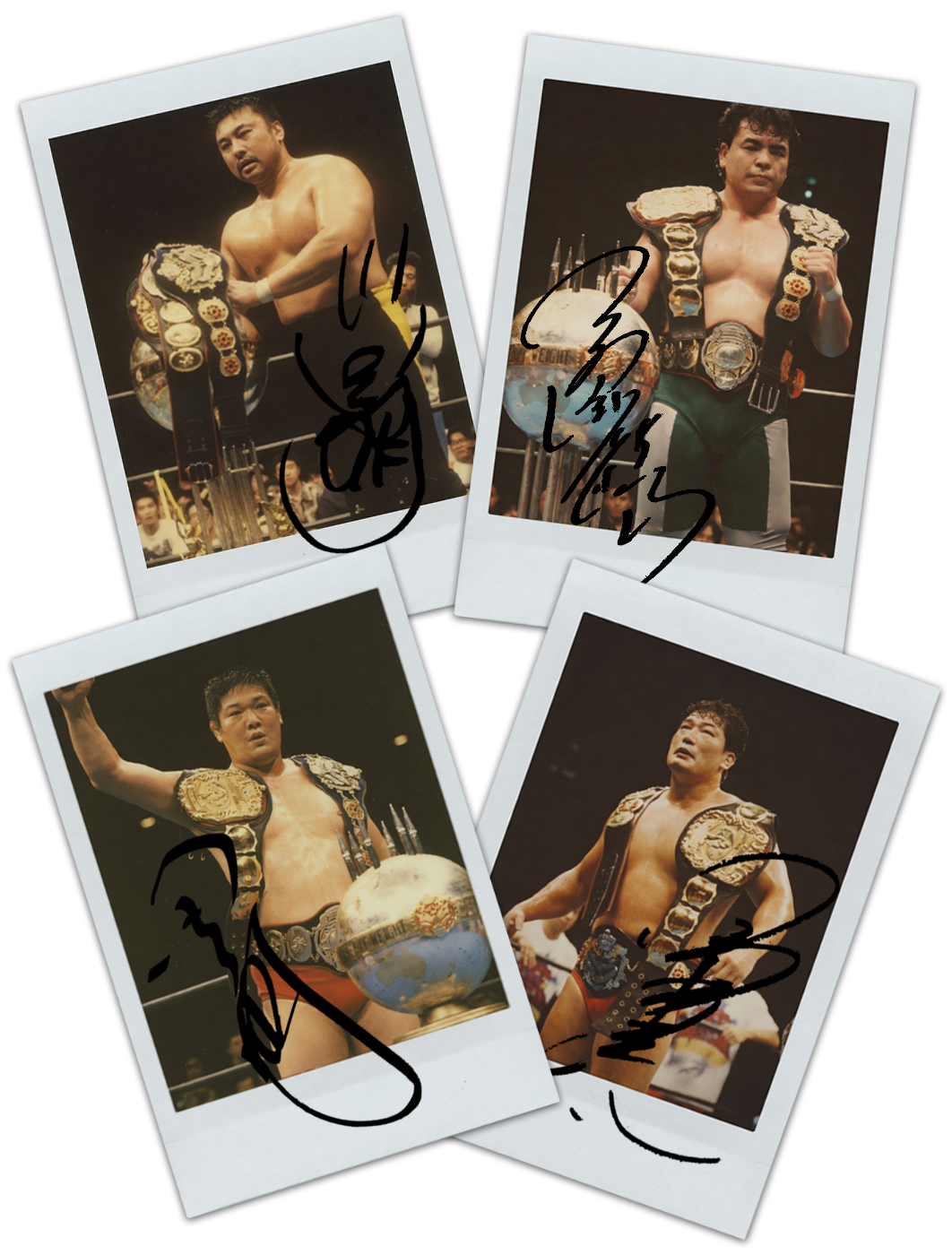
The decade got louder.
The schools defined in the 1980s reached their peak in the 1990s.
All Japan's Four Pillars - Misawa, Kobashi, Kawada, and Taue - transformed heavyweight wrestling into an endurance drama. New Japan pushed spectacle and realism to new heights with Dome-era cards, juniors, and heavyweight icons. Joshi promotions and deathmatch wrestling each built fiercely dedicated audiences of their own.
Outside Japan, fans discovered puroresu through traded VHS tapes, copied compilations, magazine scans, imported video games, and early internet forums. Grainy recordings and playable rosters passed from fan to fan carried these matches across continents long before streaming existed.
By the mid-90s, Japanese wrestling wasn’t just influential. It had become essential viewing.
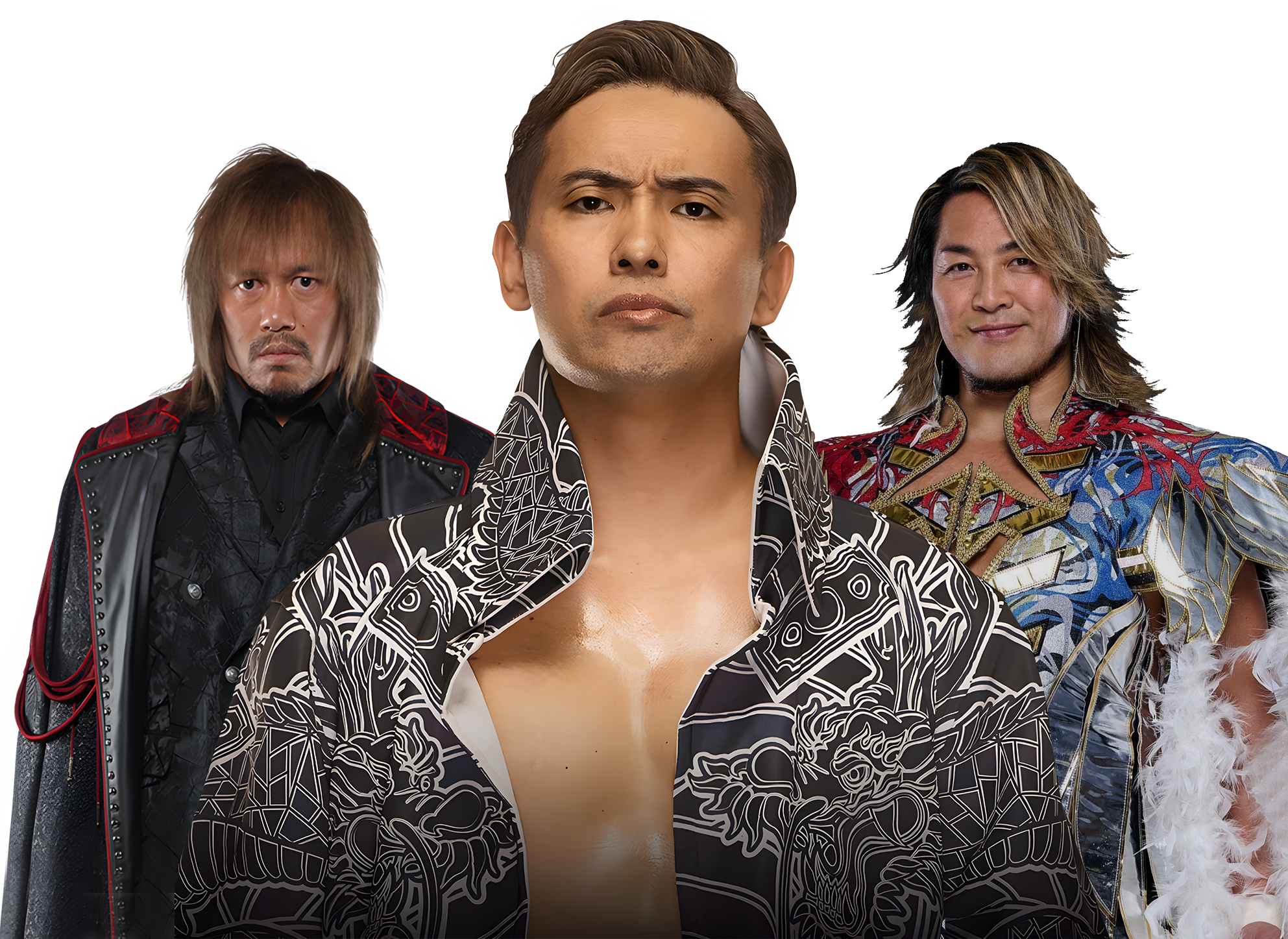
THE GLOBAL ERA.
There was a time when discovering puroresu meant hunting for it.
Fourth-generation VHS tapes. Burned DVDs. Fan-subbed compilations passed through message boards and trading circles. Entire careers lived in grainy footage and whispered recommendations.
Then the format changed.
Streaming opened the archive, from official services to searchable clips and fan-curated guides. A new generation stepped into the spotlight. Okada, Omega, Tanahashi, and Naito became modern icons, carrying Japanese wrestling from tape collections and DVD shelves onto the global stage.
What was once difficult to access became impossible to ignore.
The audience grew. The presentation evolved. But the feeling stayed the same.